Collaboration: with Kyle Lang
Format: Site-specific installations & documentation
Medium: Carbon monotype, projection mapping, photography
Year: 2021
Appias & Lang
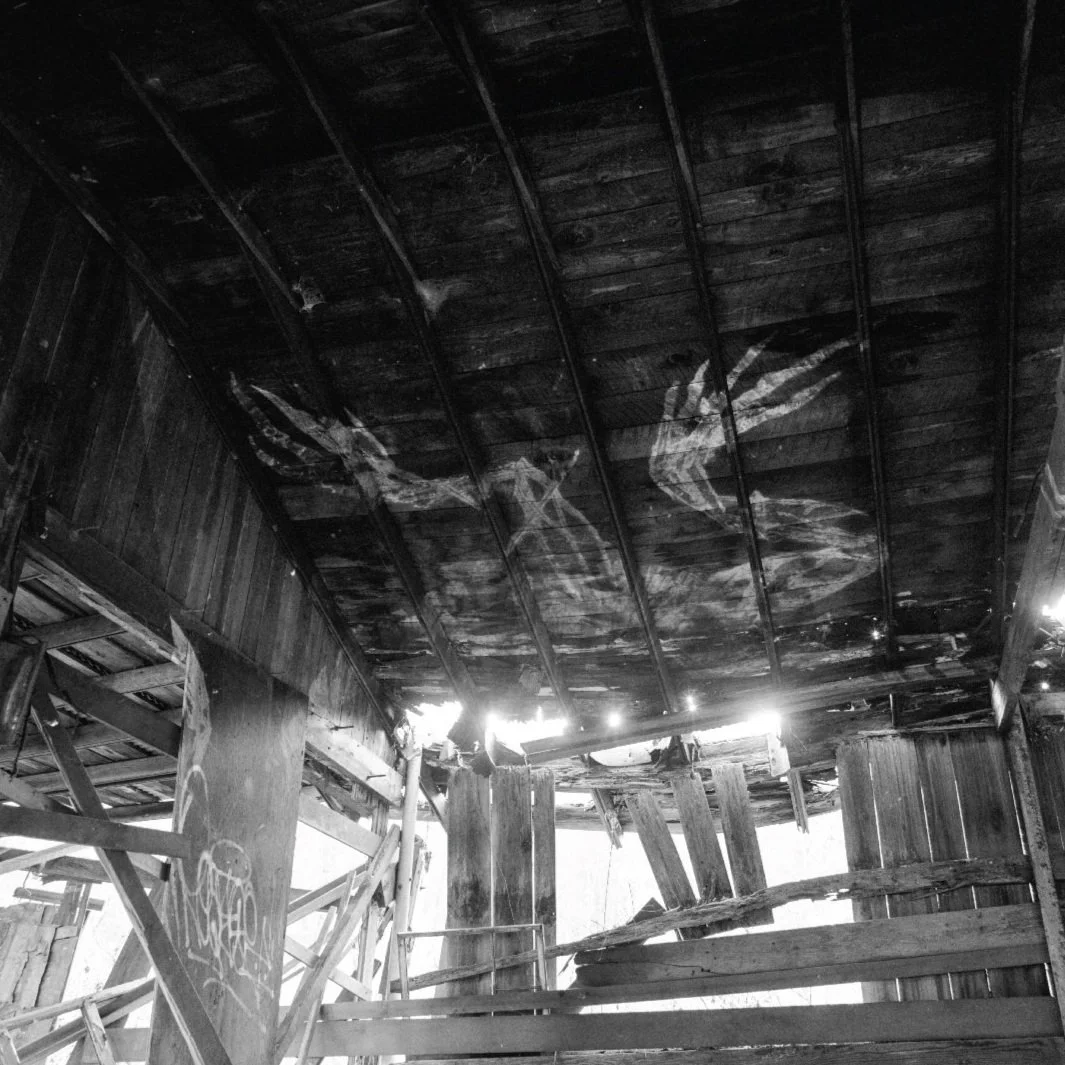
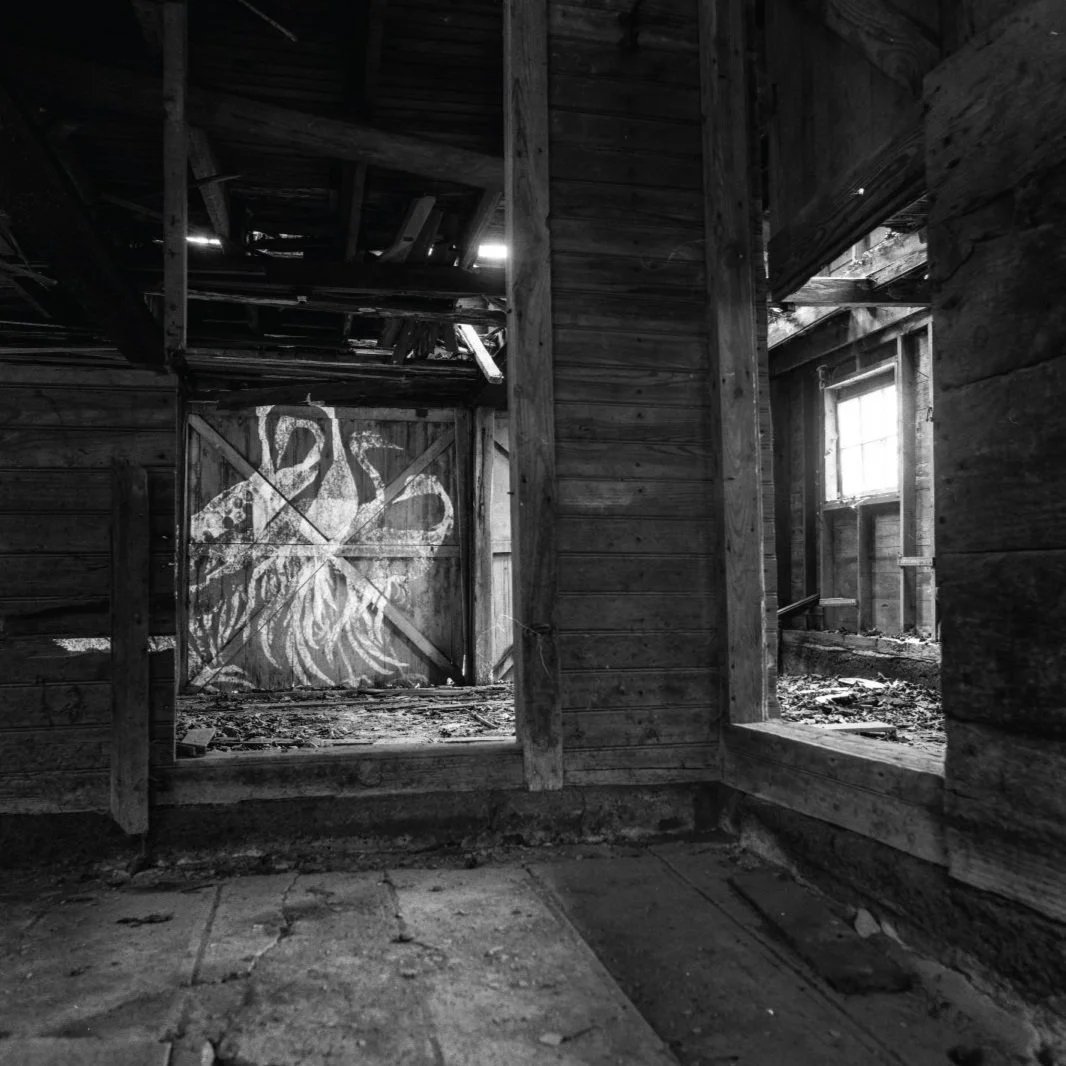
Appias & Lang is a cross-continental collaboration between visual artist Appias Albina and artist Kyle Lang, developed through a field-based, site-responsive approach. The project unfolds outside the exhibition space, in remote and often inaccessible locations, where temporary image-based interventions are created and later translated into photographic works. Operating through a sequence of image-making, site activation, and documentation, the collaboration shifts the encounter with the artwork across time and place, preserving the integrity of the original environment.
Collaboration
We worked across different countries and media, developing the project at a distance and meeting only at key moments to realise the work on site. Each meeting became a point of production — a concentrated phase where images, space, and light were brought together. The collaboration is grounded in the intersection of three distinct visual languages: carbon monotype, light-based installation, and photography.
Field Concept
At the core of the project is a field-oriented approach to image-making. The work takes place in locations that remain inaccessible to the viewer — abandoned buildings, remote interiors, and sites rarely visited or preserved in their original state. Finding these places became a substantial part of the process: we searched for spaces with minimal human presence, often hidden deep in forests or isolated landscapes, where traces of recent activity were almost absent.
These environments were approached with care, with the intention of allowing them to continue existing on their own terms. We avoided identifying or exposing specific locations, understanding that visibility could disrupt their fragile condition. The aim was to preserve these places as part of a larger ecological context — not as sites to be activated or claimed, but as spaces that could age naturally, without additional human pressure. This shared position formed an important ground for the collaboration.
The work is created without an audience. The intervention exists only for a short moment, after which the site remains unchanged. The viewer encounters the work later, through its documentation. In this way, the project separates the act of creation from the act of viewing, allowing the original location to remain intact while still becoming visible through translation into image.
Process
The process is built on a precise sequence. Visual material is developed in advance through carbon monotype, forming the core of the image language. Among these, the figure of the Jersey Devil (Thirteenth) was created specifically in response to the mythology of the forests of New Jersey and Pennsylvania, while selected elements from The Time project introduced an additional layer of myth.
The Jersey Devil became a central figure within the project — an image grounded in local folklore and shaped specifically for the U.S. sites. It emerges through interaction with the environment, functioning as a presence that belongs to the location.
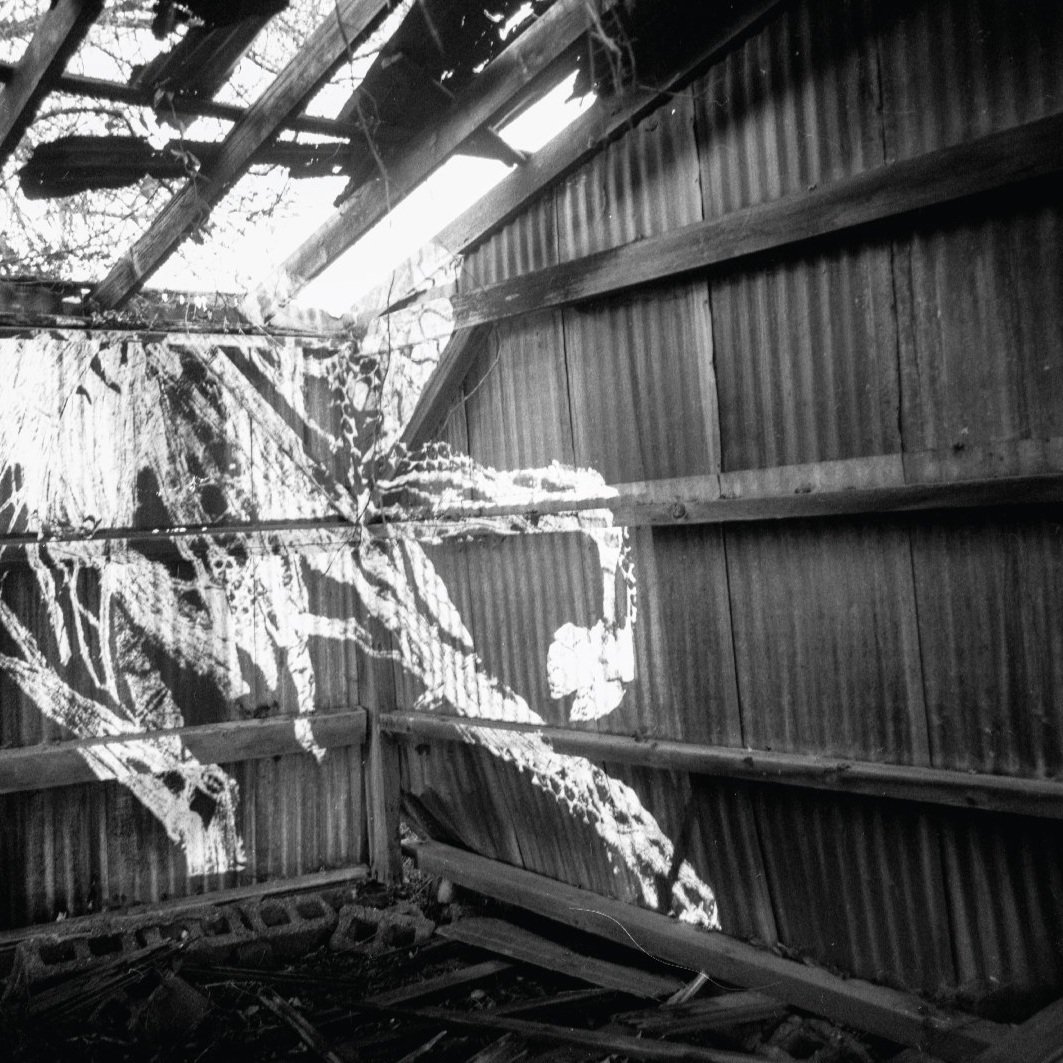
These images are then brought into the site through light and projection, forming temporary installations that exist only for the duration of the intervention. The final stage is photographic documentation, where the presence of the projected image and the space converge into a single work.
Expeditions
The project developed through a series of movements between locations. It began in Tartu, Estonia, during an artist residency, where the initial idea of working outside the exhibition space was formed. Early tests followed in Esna, exploring how image, light, and architecture could interact beyond the studio. The main expedition took place in the United States, across sites in New Jersey and Pennsylvania, where the project reached its full spatial and conceptual scale.
Much of the development occurred remotely, while physical meetings were focused on direct production.
Works
The resulting works exist as a connected body of images, where photographic documentation carries the presence of the intervention. Each image holds the meeting of monotype, light, and space, preserving a moment that cannot be revisited. Alongside individual works, the project also developed into exhibition formats that structure and extend this material.
Position
This project marked a shift in how image, place, and time can be brought into relation. It established a working logic where the image does not belong to the site, yet cannot exist without it — emerging through temporary presence and carried forward through documentation.
Locations
2021 4 Artist Residency / TYPA Printing and Paper Art Centre / Tartu, Estonia — initial concept
2021 7 Esna Gallery / Esna, Estonia — early tests and first spatial experiments
2021 11 New Jersey & Pennsylvania, USA — main expedition and site-based work
EXHIBITIONs
2021 12 Optical Artefacts, Museum of Supernatural History project, The Union of Artists, St.Petersburg, Russia
2022 12 Feminart, Est Art Space gallery, Madrid, Spain
2023 12 Traveling Letters ‘23: The Hologram / Titanic, Vilnius Academy of Arts / Vilnius, Lithuania